South Africa’s Draft National AI Policy is now part of the real business conversation.
For owners, finance teams, and accountants, that matters for one simple reason.
The policy gives a clearer picture of where regulation, funding, skills development, and digital oversight are heading.
You can read the official draft here: Draft National AI Policy Framework PDF.
If you work with financial data, compliance deadlines, payroll, VAT, or multi-entity reporting, this is not background reading anymore.
It is practical.
Especially with SARS continuing its push toward a smarter, more digital operating model.
When people talk about SARS "Smart Modernisation", what they usually mean is a tax environment built on stronger systems, faster verification, better matching, and less tolerance for messy underlying records.
That puts data integrity right at the centre of the conversation.
Not only for software vendors.
For every business owner.
And especially for accountants.
Because when your source data is inconsistent, duplicated, incomplete, or late, every downstream task gets harder. VAT gets riskier. Payroll submissions get more stressful. Year-end cleanup gets more expensive than it should be.
That is where this policy becomes relevant.
It points to an economy where AI will be used more widely, but with expectations around responsible governance, ethics, local context, and human oversight built in from the start.
Why this matters for South African businesses right now
A lot of business owners still think AI policy is something for big tech firms, universities, or government departments.
It is not.
The draft is much broader than that.
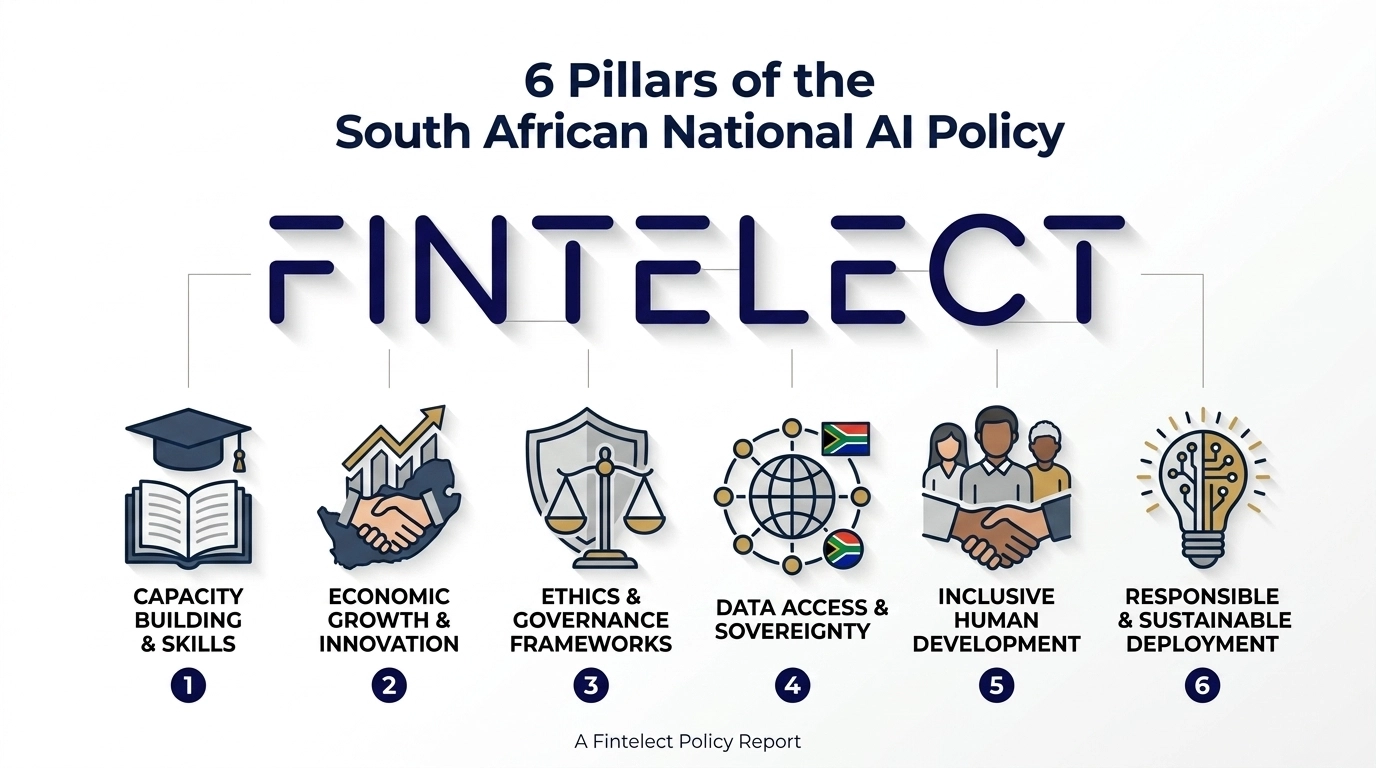
It speaks to six themes that will shape how AI is adopted in South Africa over time, and they show up in ways that are very practical for SMEs and accounting practices.
Those pillars include capacity and talent development, inclusive growth and job creation, responsible governance, ethics, cultural preservation, and human-centered deployment.
Taken together, they tell a pretty clear story.
South Africa wants wider AI adoption.
But it wants that adoption to be useful, accountable, locally relevant, and built around people rather than replacing them blindly.
The policy themes every business should understand
The government has laid out a roadmap that is worth understanding early, especially if your business depends on clean financial operations and reliable reporting.
1. Capacity and talent development
One of the clearest themes in the draft is skills.
South Africa is signalling that AI capability will need to be built across education, training, and the workplace. For businesses, that means AI literacy will gradually become part of normal operational competence, not a specialist extra.
If your team handles finance, payroll, reporting, or compliance, they will need tools and workflows that help them work faster without losing accuracy. That is where practical assistants like FintelAI become useful. They support the people already doing the work instead of forcing teams to figure everything out from scratch.
2. Inclusive growth and job creation
The draft policy clearly frames AI as an economic opportunity for broader participation, not just for large enterprises.
That includes support for local innovation, entrepreneurship, and smaller businesses. It is fair to say the policy points toward financial support mechanisms for AI adoption and ecosystem growth, including grants, incentives, and public support for innovation programmes.
What it does not do, based on the currently available public material, is set out a final, detailed schedule of guaranteed SME tax breaks, startup grants, or direct subsidies with application rules that businesses can claim today.
That distinction matters.
There is clear policy intent around inclusive growth and enabling support.
But businesses should be careful not to treat the draft itself as a confirmed list of immediate tax benefits. For now, the smart move is to track the policy, watch implementation measures, and make sure your business is operationally ready when funding or incentive mechanisms are formalised.
3. Responsible governance
This is one of the most relevant sections for accountants and compliance-focused businesses.
The policy pushes for governance structures that deal properly with risk, accountability, safety, and oversight. In day-to-day terms, that means businesses will need better controls around how data is collected, stored, used, and interpreted.
If your systems are fragmented, if staff are exporting spreadsheets back and forth, or if nobody can explain where a number came from, governance becomes a real problem very quickly.
That is why secure, structured platforms matter. If you are handling sensitive records under POPIA, your software environment cannot be an afterthought.
4. Ethics
The ethics theme is not abstract.
It affects how AI outputs are trusted inside a business. If a system helps identify a compliance risk, suggest a tax position, or surface an anomaly, the people using it need enough clarity to understand what they are seeing and what to do next.
For finance teams, explainability matters.
You still need human judgement.
You still need review.
And you still need records that make sense when someone asks questions later.
5. Cultural preservation
This part of the draft is easy to overlook, but it is important in the South African context.
The policy recognises that AI should reflect local languages, local realities, and local context. For businesses, that means generic global tooling will not always be a great fit for South African workflows, regulations, or reporting expectations.
Tax, payroll, CIPC processes, SARS deadlines, and local business language all have their own nuances.
A platform that actually understands the South African environment has a real advantage there.
6. Human-centered deployment
The draft also makes it clear that AI should support people.
That is probably the most useful way for businesses to think about adoption right now.
Good AI should reduce repetitive work, improve visibility, and make decision-making easier. It should help a business owner feel more in control. It should help an accountant catch issues earlier. It should help teams spend less time hunting for information and more time acting on it.
That is a far healthier model than chasing automation for its own sake.
Why data integrity matters more under SARS Smart Modernisation
SARS has been building toward a more data-driven operating model for years, with stronger digital systems, more verification, and more emphasis on accurate records.
That changes the practical job of both finance teams and accountants.
The pressure point is no longer just submission.
It is the quality of the data underneath the submission.
If your accounting records are incomplete, if source documents are scattered, if payroll and VAT data do not reconcile cleanly, or if client information lives across too many disconnected tools, problems tend to surface late and at the worst possible time.
For accountants, this is especially important now.
Clients increasingly expect faster answers, better visibility, and fewer surprises. At the same time, a more modern SARS environment rewards clean records and makes weak processes harder to hide.
That is why the conversation around AI should not start with flashy automation.
It should start with whether your business data is structured, current, and dependable enough to support sound reporting and smarter systems.
A practical example
Take a small accounting practice managing several SME clients.
On paper, each client is compliant.
In reality, one client’s VAT records are late, another has payroll data sitting outside the accounting system, and a third has directors asking for instant answers on cash flow and tax exposure.
That is the kind of environment where pressure builds quietly.
Now add a more digital SARS, rising client expectations, and broader AI adoption across the market.
The firms that cope best will not be the ones making the biggest claims about AI.
They will be the ones with the cleanest data, the clearest workflows, and the best visibility across every entity they manage.
That same logic applies to a growing business with no in-house finance lead.
If your numbers are always a week behind, every compliance task feels heavier than it should. If your systems talk to each other and your reminders, records, and reporting are centralised, the workload starts to feel manageable again.
Tiered Breakdown: How the Policy Hits Your Segment
| Business Size | The Risk | The Opportunity |
|---|---|---|
| SMEs / Startups | Running lean with poor systems and falling behind on reporting, compliance, and decision-making. | Building better foundations early, improving visibility, and being ready if future support measures or incentive programmes open up under AI-related policy implementation. |
| Accounting Practices | Losing time to fragmented client data and struggling to deliver fast, accurate answers in a more digital compliance environment. | Using stronger multi-company workflows, cleaner data, and AI-supported insights to serve clients more confidently. |
| Medium Enterprises | Carrying process debt across finance and compliance teams while SARS and internal stakeholders expect better data quality. | Improving efficiency, strengthening governance, and reducing operational friction with better-connected systems. |
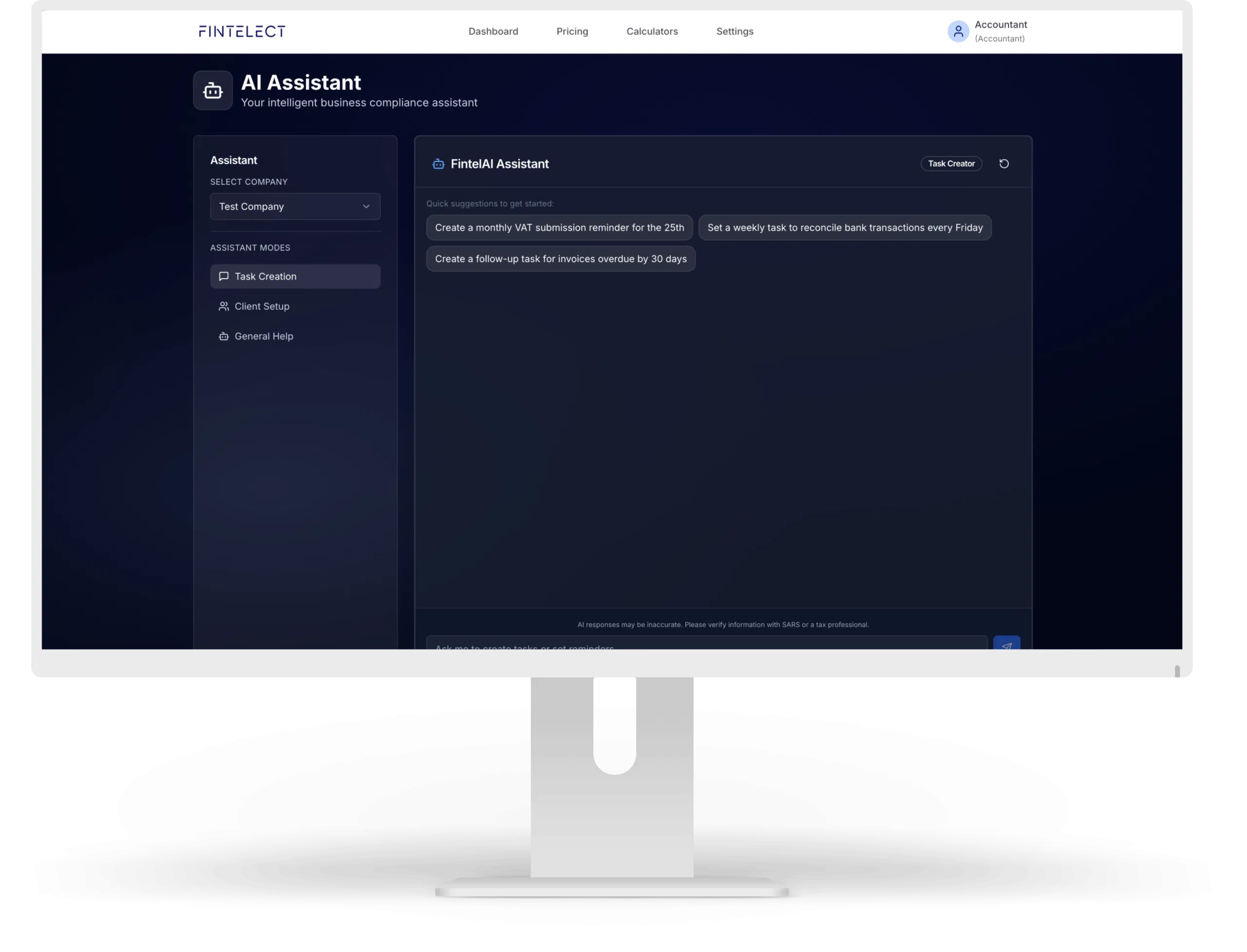
The solution: Why Fintelect fits this moment
Fintelect is built for the reality South African businesses are dealing with right now.
That means compliance pressure.
Messy admin.
Multiple deadlines.
And the growing need for clean, usable financial data.
We help with that through:
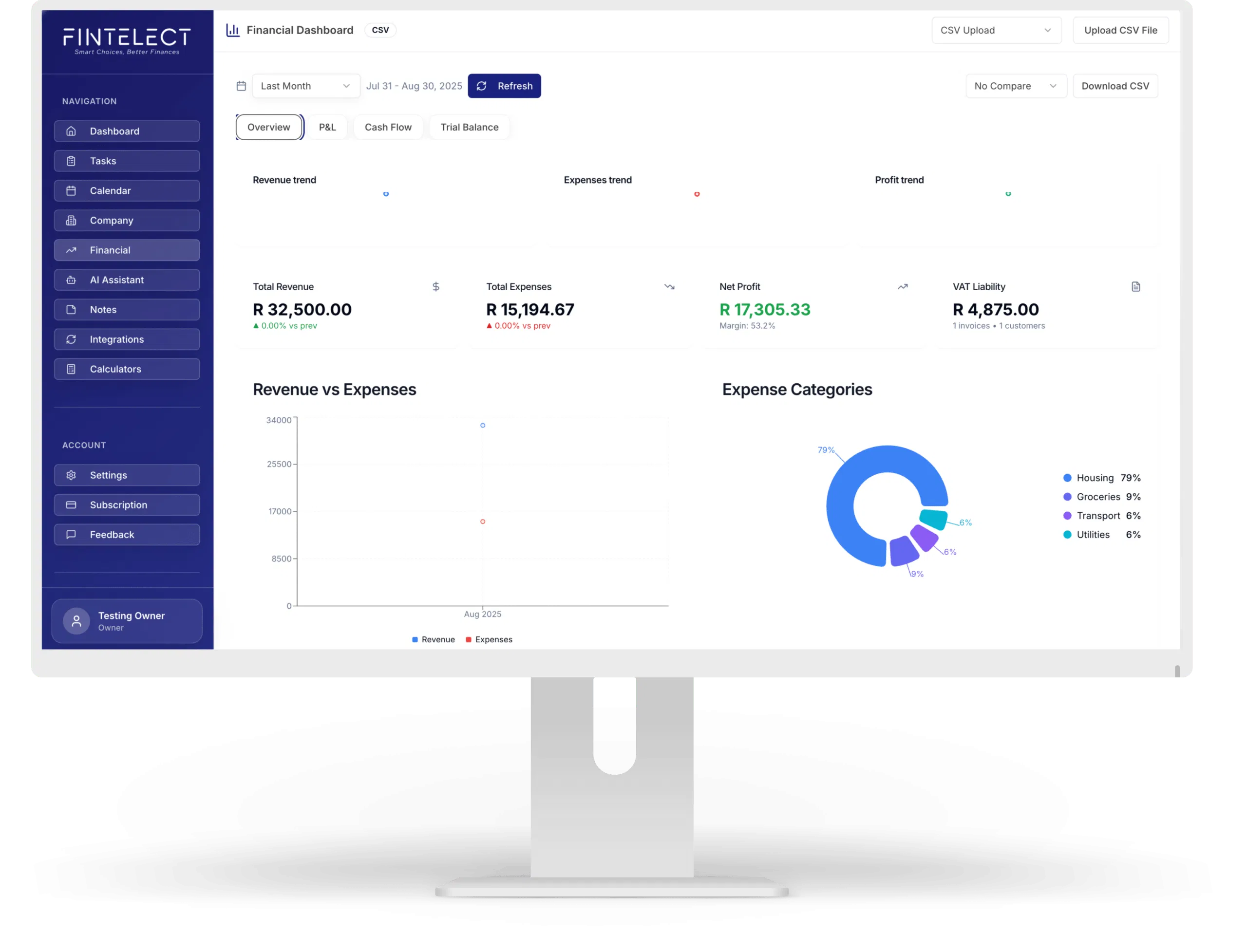
- Direct Sage & Xero integration: bringing your financial data into one place for better visibility.
- FintelAI: a 24/7 assistant that helps make sense of your financial and compliance questions in plain English.
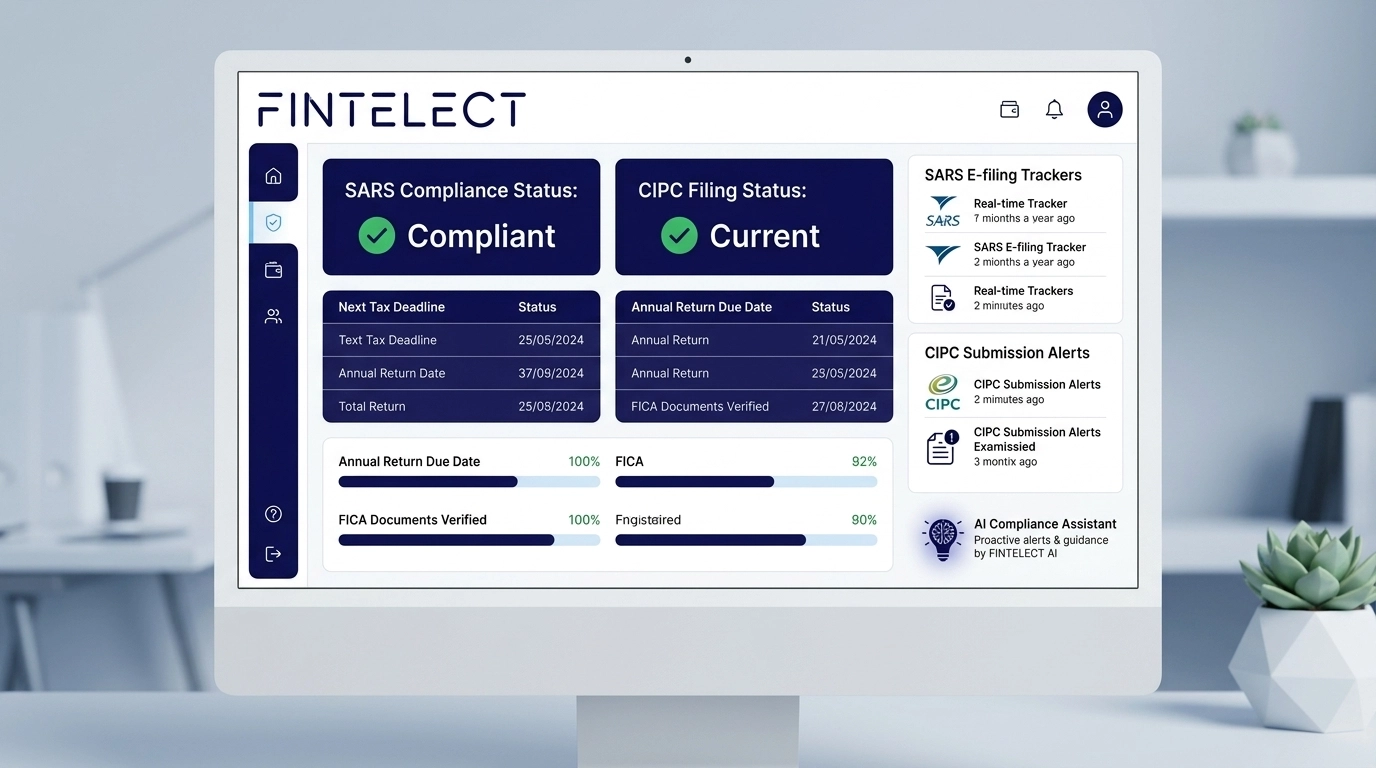
- Automated SARS & CIPC tracking: so important deadlines like VAT201, EMP501, provisional tax, and annual returns are easier to stay on top of.
The real value is not just automation.
It is confidence.
When your records are cleaner and your workflow is tighter, you spend less time reacting and more time making decisions.
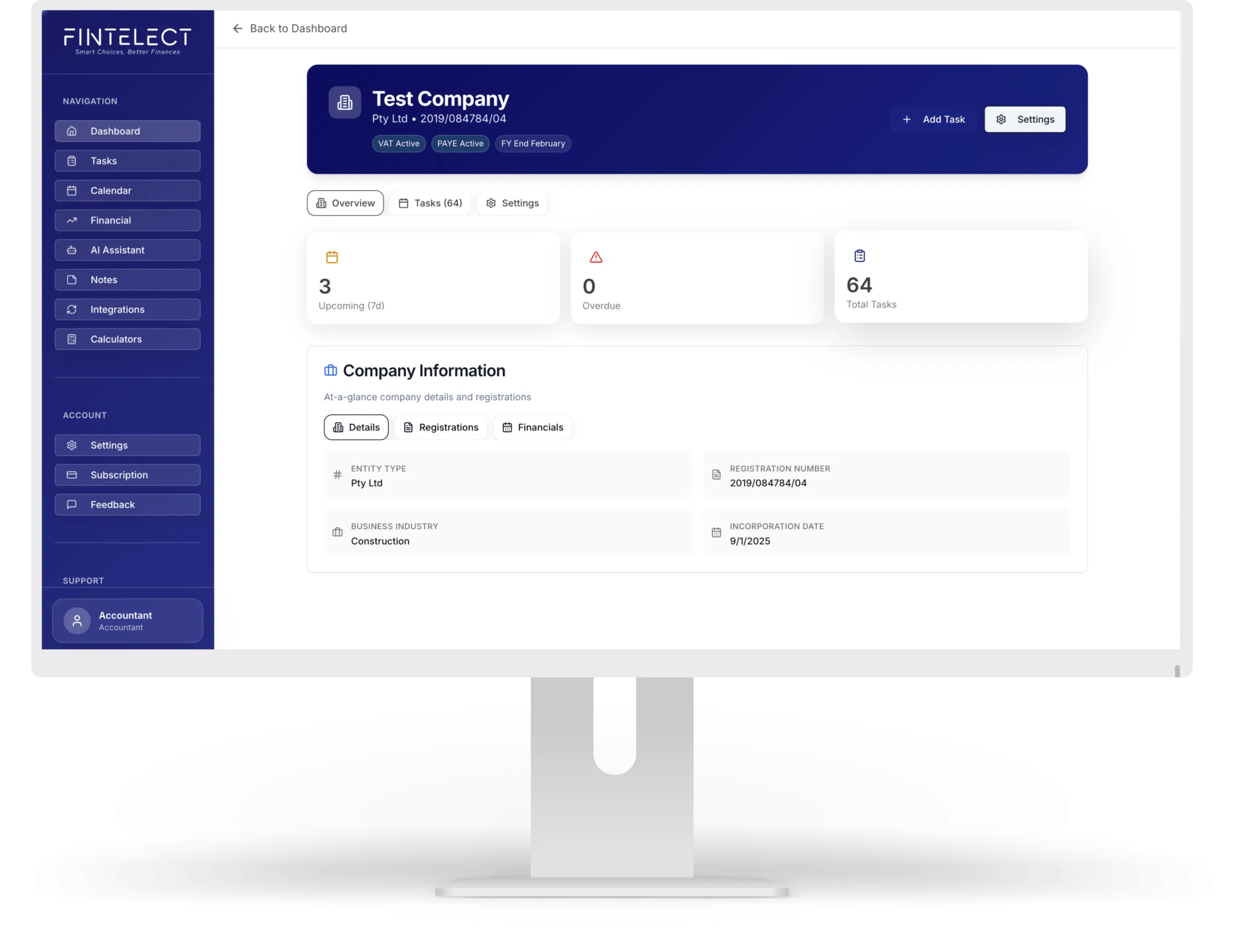
What you should do next
- Read the draft itself: Start with the official document here: Draft National AI Policy Framework PDF.
- Check your data quality: Look at the records behind your VAT, payroll, and tax submissions. If the source data is messy, fix that first.
- Review your systems: If your finance stack still depends on manual chasing and spreadsheet patchwork, that is where risk starts to grow.
- Get your team AI-ready: Focus on tools that support staff, improve visibility, and keep humans in control.
- Track funding developments carefully: The policy clearly supports inclusive growth and ecosystem development, but businesses should wait for confirmed implementation details before assuming any tax break, grant, or subsidy is immediately available.
Q&A
"Is AI going to replace my accountant?"
No. The more realistic shift is that accountants who use better tools will be able to work faster, spot issues earlier, and serve clients better. Human judgement still matters.
"Does the draft policy already guarantee tax breaks or grants for my business?"
Not in a claim-ready way. The policy direction supports inclusive growth, innovation, and broader AI adoption, but the draft itself should not be treated as a final, immediate list of guaranteed SME incentives. Watch for formal implementation measures and funding announcements.
"Why is data integrity such a big deal now?"
Because better digital enforcement and smarter tax administration put more weight on the accuracy of your underlying records. Clean source data makes everything else easier, from filing to forecasting.
"How does this connect to Fintelect?"
Fintelect helps businesses and accounting professionals keep financial data organised, track SARS and CIPC deadlines, and get answers faster through FintelAI. That is exactly the kind of operational readiness this policy environment rewards.
"Is my data safe?"
Fintelect is built with bank-level security and POPIA-conscious practices, which fits the broader direction of responsible governance and accountable AI use.
If you want a simpler way to stay on top of compliance while building better financial visibility, join Fintelect today.